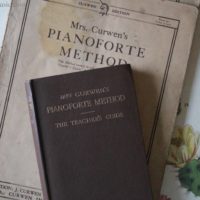
Curwen Music - a site dedicated to discovering Mrs. Curwen's Child Pianist
a site dedicated to discovering Mrs. Curwen's Child Pianist
Menu
Skip to content
  • Home
  • About Me
  • Student Lessons
    • For Parents
  • Piano Teachers
  • Blog
    • Tips for Piano Teachers
    • Understanding Mrs. Curwen’s Pianoforte Method
  • Shop
  • Resources
    • Piano Teacher Directory
    • Duet Recordings
  • Contact

Author: Kelli Rummel

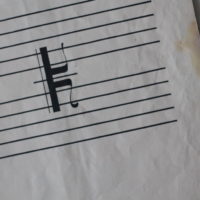
Why does Mrs. Curwen teach the C Clef? Is it necessary?
1 / 28 / 192 / 5 / 19

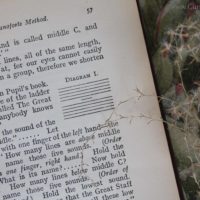
Mrs. Curwen wants children to read music. If they can read the notes on the staff, they can play the songs. If they can play songs, they’re going to continue playing. They’ll find satisfaction and joy in their progress. Much of this begins with reading the staff.

Mrs. Curwen wants the children to understand that the staff is continuous. We have the treble staff and the bass staff, but they are related to each other. We teach them together using the C Clef.
Leave a comment
Share
  • Share
  • Pin it

Preliminary Lesson Examination

1 / 23 / 199 / 16 / 19

To check the teacher’s work; to secure that nothing has been left out, and that the child is ready to begin to use the Lessons, Reading Exercises, and Duets of Step I.

Leave a comment
Share
  • Share
  • Pin it

Written Preliminary Lesson 5c

1 / 21 / 194 / 16 / 19

To give clear but simple ideas about the meaning of rhythm as the basis of music.

Leave a comment
Share
  • Share
  • Pin it

Written Preliminary Lesson 5b

1 / 21 / 194 / 16 / 19

To show the use of a five lined staff, and to lead up to the division of the eleven lined staff into two portions for piano music.

Leave a comment
Share
  • Share
  • Pin it

Written Preliminary Lesson 5a

1 / 19 / 194 / 16 / 19

To find the names and pitch of the sounds left out when building up the staff in the order of thirds.

Leave a comment
Share
  • Share
  • Pin it

Written Preliminary Lesson 4e

1 / 17 / 194 / 16 / 19

To teach the signs of the quarter note, half note, and whole note. Also, teaching a bar line or strong accent mark.

Leave a comment
Share
  • Share
  • Pin it

Written Preliminary Lesson 4d

1 / 13 / 194 / 16 / 19

Dictation of additional names and pitches on the staff.

Leave a comment
Share
  • Share
  • Pin it

Written Preliminary Lesson 4c

1 / 13 / 194 / 16 / 19

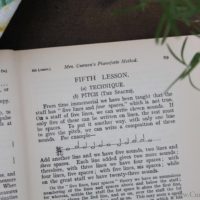
Explaining the C Clef, G Clef, and F Clef, and establishing fives lines on the staff that the child knows.

3 Comments
Share
  • Share
  • Pin it

Written Preliminary Lesson 4b

1 / 13 / 194 / 16 / 19

To show how the Staff for piano spans a ladder of eleven lines, picturing sounds a 3rd apart, spanning from low G to high F.

Leave a comment
Share
  • Share
  • Pin it

Written Preliminary Lesson 4a

1 / 12 / 194 / 16 / 19

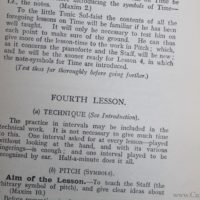
To teach the Staff (the arbitrary symbol of pitch), and give clear ideas about it.

Leave a comment
Share
  • Share
  • Pin it

Recordings from Farm Scenes by Dr. Walter Carroll

1 / 11 / 1910 / 18 / 19

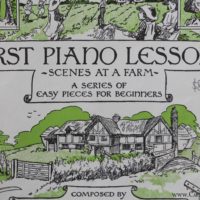
Here is a list of recordings of many of the simple tunes from Farm Scenes by Dr. Walter Carroll. Mrs. Curwen suggested this book as a simple book for teaching rote playing to a child who has not yet learned to read notation.

2 Comments
Share
  • Share
  • Pin it

Written Preliminary Lesson 3

1 / 11 / 194 / 16 / 19

To fix the locality of the pitch sounds by keyboard exercises, which are to be repeated until they can be done rapidly and almost mechanically.

Leave a comment
Share
  • Share
  • Pin it

What does Mrs. Curwen mean when she says music is taught through the Ear and not the Eye?

1 / 11 / 192 / 5 / 19

“The sine qua non of reading music is a quick recognition of the written sounds in relation to the keyboard; an unhesitating obedience of the finger to the eye; an obedience so unhesitating and complete that the action of the two is almost simultaneous.” Mrs. Curwen.

We’ll review how Mrs. Curwen shows us how to accomplish this with our students.

Leave a comment
Share
  • Share
  • Pin it

Written Preliminary Lesson on Intervals (used after lesson 2)

1 / 9 / 194 / 16 / 19

To teach the meaning of an “Interval,” and to give first ideas of fingering and keyboard measurement.

Leave a comment
Share
  • Share
  • Pin it

What are the titles of each Recording?

1 / 9 / 192 / 5 / 19
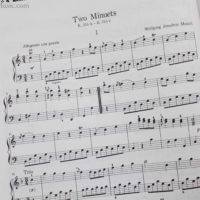
The recording below is Two German Dances 2 by Joseph Haydn from the book The Classical Period. It's a repertory of works by Haydn, Mozart, Beethoven, and their contemporaries. It's published by Denes Agay.

Each recording used on CurwenMusic.com has been performed, recorded , and edited specifically for use with lessons. This post provides easy access to each recording along with its composer and book.

1 Comment
Share
  • Share
  • Pin it

Posts navigation

Previous Page 1 2 3 4 Next Page
  • Instagram
  • Email
  • Facebook

Hi! I’m Kelli. I’ve been teaching piano lessons for over ten years, and I recently discovered Mrs. Curwen’s Pianoforte Method. Her philosophy has changed how I teach piano.

I hope this site helps you on your own musical journey, enriching your life as you create music in your home, church, and community.

Categories

  • Audio Recordings
  • Beginner Piano
  • For Parents
  • Piano Lessons
  • Piano Teacher Tips
  • Sheet Music Downloads
  • Understanding Mrs. Curwen
  • Videos for Teachers

Recent Posts

  • Mozart the Wonder Boy by Opal Wheeler & Sybil Deucher
  • Session 2: Q&A Recording
  • Session 1: Q&A Recording
  • The Hymn: ‘For the Children’s Sake’ by Essex Cholmondeley
  • Supplementary Books for 1st Step Learners

© 2018-2023 CurwenMusic.com

Angie Makes Feminine WordPress Themes